Digital Apostilles for International Law Firms
Digital Apostilles for International Law Firms
International law firms regularly authenticate client documents for use abroad. This guide explains how e-Apostille services support law firms with efficient document processing while maintaining the professional standards and confidentiality that legal practice requires.
Key points:
- Law firms need reliable apostille services that respect client confidentiality
- e-Apostilles offer efficiency advantages for time-sensitive legal matters
- Understanding destination country acceptance requirements prevents delays in legal proceedings

Everything You Need for a Fast Legalisation Service
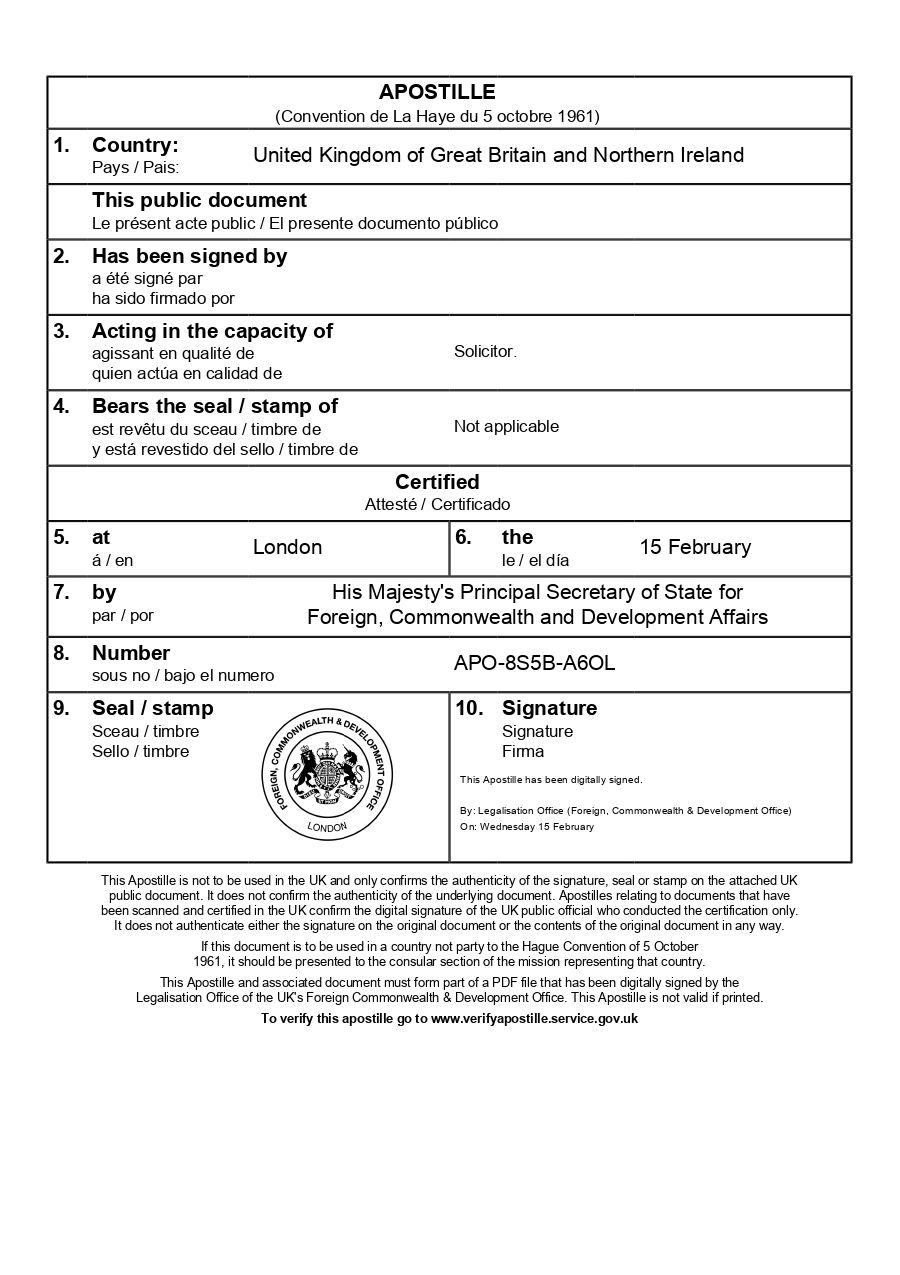
Your e-Apostille is issued directly by the UK Foreign, Commonwealth & Development Office (FCDO). Our team will verify the document and organise valid electronic solicitor certification to avoid delays.
Document Authentication Requirements in International Legal Practice
Document Authentication Requirements in International Legal Practice
International law firms encounter document authentication requirements across multiple practice areas. Corporate transactions, cross-border litigation, estate administration, family law matters, and immigration cases all generate documents that may require apostille certification for use in foreign jurisdictions.
The nature of legal practice creates specific requirements that differ from other professional sectors. Client confidentiality must be maintained throughout the apostille process. Document handling must meet professional standards. Processing timelines often align with court deadlines, transaction closing dates, or other legally significant dates that cannot be moved.
Digital vs Traditional Apostilles in Legal Practice
Digital vs Traditional Apostilles in Legal Practice
Law firms must consider whether digital or traditional paper apostilles better serve their clients’ needs. This decision depends on the destination country, the specific foreign authority that will receive the document, and the nature of the legal matter involved.
The e-Apostille will not always be appropriate. Court documents containing wet ink court seals and/or wet ink signatures of court officials will still require the traditional paper apostille.
Powers of attorney, affidavits and statutory declarations should be signed in the presence of a UK solicitor or notary public first. If the witnessing solicitor or notary countersigns the document with a traditional wet ink signature, the paper apostille will be required and the e-Apostille will not be suitable.
e-Apostilles, where applicable, offer significant advantages for time-sensitive matters. Electronic delivery means apostilled documents can reach foreign lawyers, courts, or authorities within hours of FCDO processing rather than the days required for postal delivery. This speed can be critical in urgent litigation, imminent transaction closings, or time-limited regulatory filings.
However, acceptance remains the primary consideration. Conservative legal systems and traditional court procedures in some jurisdictions mean paper apostilles remain preferred or required. Foreign courts in particular tend to be conservative about document formats and may insist on physical documents even when digital apostilles are legally valid.
Law firms serving clients with regular international requirements benefit from developing knowledge about which foreign jurisdictions and authorities accept digital apostilles. This institutional knowledge allows confident advice to clients about processing options and realistic timelines.
How The e-Apostille Process Works
The process is simple. Follow the steps below and we will arrange the e-apostille for you.
Working with Apostille Service Providers as a Law Firm
Working with Apostille Service Providers as a Law Firm
Law firms benefit from establishing relationships with apostille service providers who understand legal practice requirements. Providers familiar with legal documents, court procedures, and professional standards can handle instructions more efficiently and anticipate potential complications.
Clear communication channels matter significantly. Law firms need to reach knowledgeable staff quickly when urgent matters arise or when unusual document types require guidance.
Flexibility in billing arrangements helps law firms manage client costs and firm finances. Some firms prefer to pay for apostille services directly and bill clients separately. Others prefer service providers to bill clients directly.
Providers should accommodate different billing preferences and provide clear invoicing that supports professional accounting requirements.
Understanding of professional obligations helps service providers work effectively with law firms. Providers who recognise the significance of court deadlines, transaction dates, and professional conduct requirements can prioritise appropriately and communicate effectively about processing status and potential delays.