How to Verify an e-Apostille
How to Verify an e-Apostille
Verifying an e-Apostille confirms its authenticity and ensures the document hasn’t been tampered with since the e-Apostille has been issued. This guide explains the simple verification process using the UK government’s official system and what information the verification provides.
Key points:
- Verification uses the official FCDO government verification portal
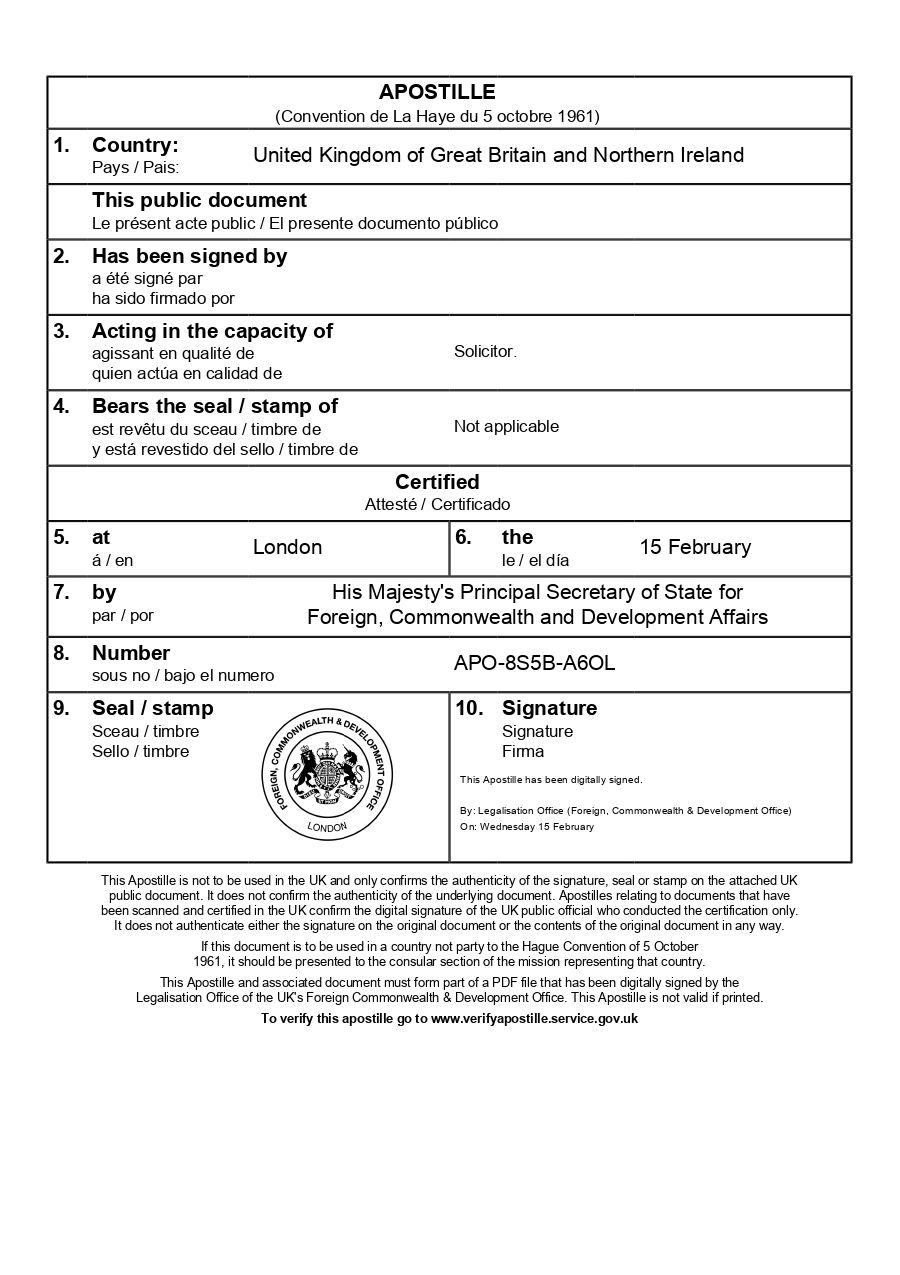
- Requires the apostille number from section 8 and the issue date
- Verification confirms the apostille is genuine and shows certification details

Everything You Need for a Fast Legalisation Service
Your e-Apostille is issued directly by the UK Foreign, Commonwealth & Development Office (FCDO). Our team will verify the document and organise valid electronic solicitor certification to avoid delays.
Understanding e-Apostille Verification
Understanding e-Apostille Verification
e-Apostille verification allows anyone to confirm that a UK e-Apostille is genuine and was issued by the Foreign, Commonwealth and Development Office. This verification system provides security against fraud and gives receiving authorities confidence that apostilled documents are authentic.
The verification process is free, instant, and available to anyone worldwide with internet access. You don’t need special software or accounts, just the apostille reference number and issue date from the e-Apostille document itself.
Verification checks the e-Apostille against the FCDO’s secure database of issued apostilles. When a match is found, the system confirms the apostille details including who certified the underlying document, when the apostille was issued, and which FCDO official processed it.
Step-by-Step Verification Process
Verifying a UK e-Apostille is straightforward and takes less than a minute once you have the required information.
The Fastest Possible Timeline: Step by Step
Understanding Verification Results
Understanding Verification Results
A verified e-Apostille shows confirmation including the apostille number that matches section 8, the date of issue, the name of the solicitor who provided electronic certification of the underlying document, their capacity (typically “Solicitor”), whether a stamp or seal was present (usually “Not applicable” for e-Apostilles), and the name of the FCDO official who issued the e-Apostille.
This information confirms the e-Apostille is genuine and provides transparency about the certification chain. The solicitor name shows who certified the underlying document as authentic before the FCDO issued the e-Apostille.
Verification Failures
If verification fails, the system indicates the apostille number and date combination was not found in the FCDO database. This could mean the apostille number was entered incorrectly, the date is wrong, the apostille is fraudulent, or the apostille was issued very recently and hasn’t yet appeared in the verification database.
If you receive a verification failure for an apostille you believe is genuine, check you entered the apostille number and date exactly as they appear on the certificate. Even small errors prevent successful verification.
How The e-Apostille Process Works
The process is simple. Follow the steps below and we will arrange the e-apostille for you.