How Does a Digital Solicitor Signature Work?
How Does a Digital Solicitor Signature Work?
A digital solicitor signature is an electronic method used by solicitors to certify documents without requiring physical signatures or seals. This guide explains how digital signatures work, why they’re accepted for e-Apostilles, and how to verify that a solicitor’s digital signature is valid.
Key points:
- What a digital solicitor signature is
- How solicitors apply digital signatures to documents
- Why digital signatures are legally valid
- How to verify a digital signature before submitting for e-Apostille

Everything You Need for a Fast Legalisation Service
Your e-Apostille is issued directly by the UK Foreign, Commonwealth & Development Office (FCDO). Our team will verify the document and organise valid electronic solicitor certification to avoid delays.
Understanding Digital Solicitor Signatures
Understanding Digital Solicitor Signatures
A digital solicitor signature is a cryptographically secured electronic signature that proves a solicitor has certified a document. When a solicitor digitally signs a document, they’re using technology that creates a unique encrypted marker that cannot be copied, altered, or forged.
How Digital Solicitor Signatures Work for e-Apostilles
How Digital Solicitor Signatures Work for e-Apostilles
When you need a document certified by a solicitor for an e-apostille, the solicitor can either certify a paper copy with a traditional wet ink signature, or certify a digital copy using an electronic signature. Digital certification may be faster and more convenient for both parties.
The solicitor reviews your original document and creates a certified copy, which they then sign digitally using their electronic signature certificate. The resulting PDF contains embedded metadata that proves the solicitor’s identity and confirms the document has not been altered since it was signed.
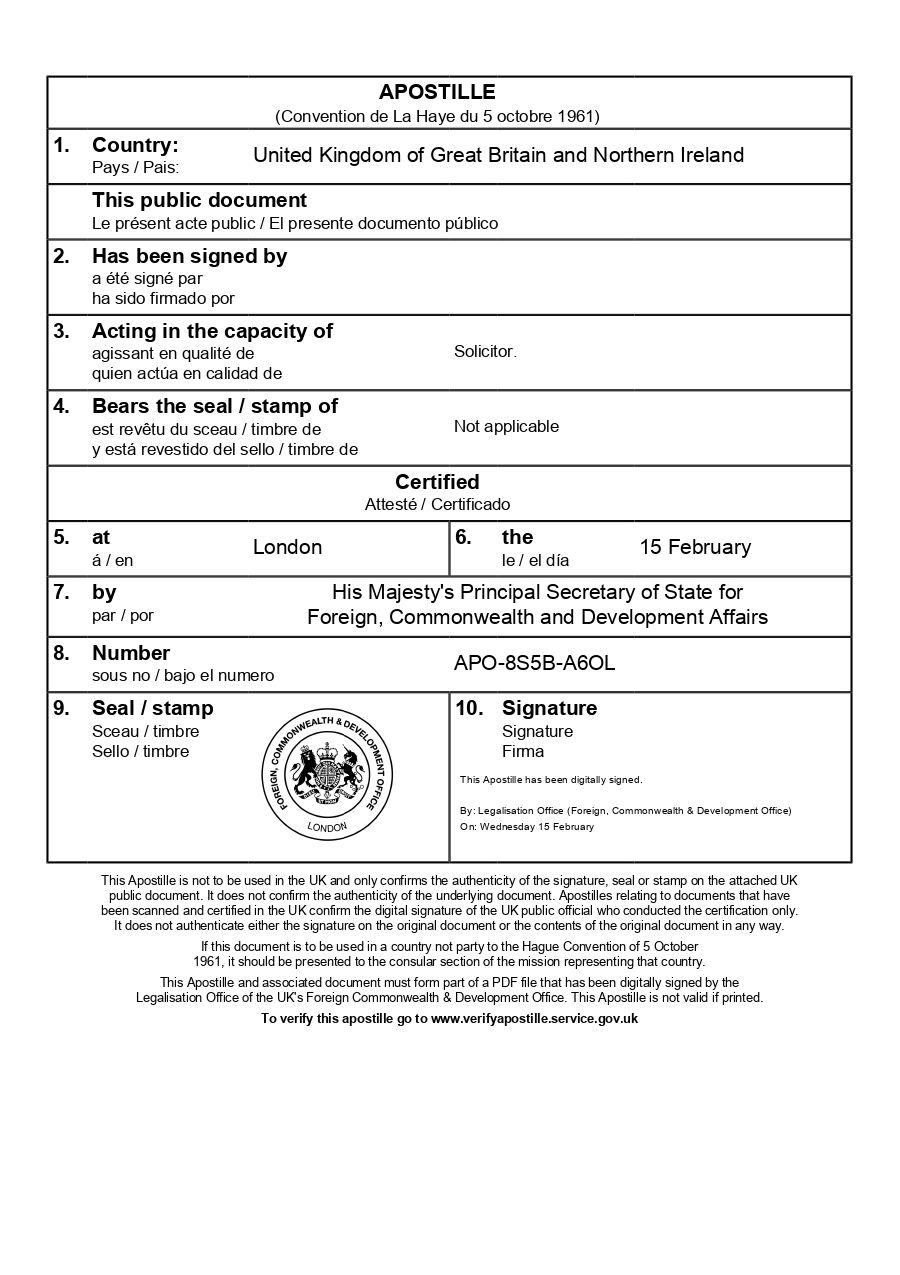
When you submit this digitally signed document to the FCDO for e-apostille, they verify the solicitor’s electronic signature through the certificate authority that issued it. If the signature is valid and the solicitor is registered with the appropriate regulatory body, the FCDO will issue the e-apostille.
The advantage of this process is speed and security. There’s no need to post documents (IF electronic versions can be verified), wait for physical signatures, or risk documents being lost in transit. The entire certification and apostille process can be completed electronically from start to finish. In some cases, solicitors will still need to see the physical, original document before they can add the electronic certification.
How to Verify a Digital Solicitor Signature
You can check some aspects of a digital signature within Adobe Reader