Countries that Require Embassy Legalisation Instead
Countries that Require Embassy Legalisation Instead
Not all countries accept UK apostilles alone for document authentication. This guide explains which countries require embassy legalisation, what the process involves, and how it differs from standard apostille certification.
Key points:
- Countries outside the Hague Convention do not recognise apostilles alone
- These countries require traditional paper apostille plus embassy attestation
- Common embassy legalisation countries include UAE, Qatar, Kuwait, and Vietnam
- The process takes longer and costs more than standard apostille legalisation

Everything You Need for a Fast Legalisation Service
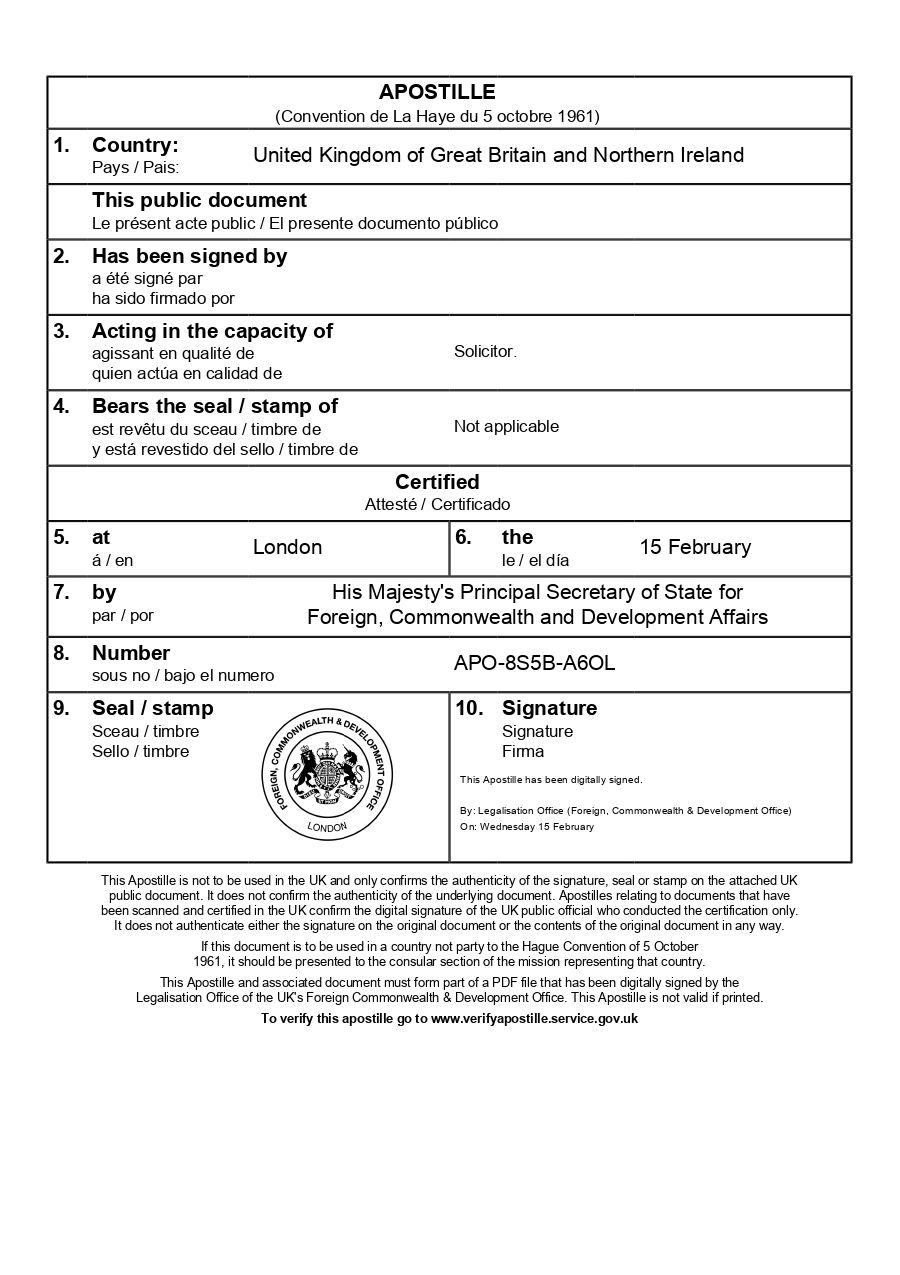
Your e-Apostille is issued directly by the UK Foreign, Commonwealth & Development Office (FCDO). Our team will verify the document and organise valid electronic solicitor certification to avoid delays.
Understanding Embassy Legalisation Requirements
Understanding Embassy Legalisation Requirements
Embassy legalisation is required for countries that are not members of the Hague Apostille Convention. These countries do not recognise the apostille certificate issued by the UK Foreign, Commonwealth and Development Office alone. Instead, they require an additional layer of authentication from their own embassy or consulate in the United Kingdom.
The process works in stages. Your document first requires the traditional paper apostille certification from the FCDO. Once apostilled, the document must then be submitted to the relevant foreign embassy or consulate in London for further attestation. This embassy legalisation step confirms the FCDO apostille is genuine and authenticates the entire chain of certification.
Why Some Countries Don’t Accept Apostilles
Countries outside the Hague Convention have not formally agreed to recognise the apostille certificate alone. adopted the simplified apostille system and instead maintain their own bilateral authentication agreements. These countries typically require documents to also be verified by their diplomatic embassy or consulate after the paper apostille has been issued.
The Two-Stage Authentication Process
Embassy legalisation requires two distinct steps. First, your document is apostilled by the UK FCDO. Second, the apostilled document is submitted to the foreign embassy for their attestation stamp or certificate. Both steps are mandatory for non-Hague countries.
Additional Requirements Some Embassies Impose
Some embassies require additional steps or have additional requirements before they will legalise documents. For example, solicitors may need to include very specific wording when certifying documents in cases where the name on the document does not exactly match the name on that person’s passport. Some embassies also insist on all documents being legalised invididually and do not accept sets or bundles of documents legalised together under one apostille certificate.
Common Countries That Require Embassy Legalisation
Common Countries That Require Embassy Legalisation
Several countries frequently require embassy legalisation for UK documents.
The United Arab Emirates is one of the most common, particularly for employment documents, educational certificates, and marriage certificates. The UAE Embassy in London processes thousands of UK document legalisations annually for visa applications and employment purposes.
Qatar requires embassy attestation for most document types, especially educational certificates and professional qualifications. Qatar’s embassy legalisation process can be particularly time-consuming and they have very specific requirements in relation to legalising documents that relate to higher education.
Kuwait, Saudi Arabia, and other Gulf Cooperation Council countries typically require embassy legalisation.
Vietnam requires embassy legalisation through the Vietnamese Embassy in London. Malaysia requires similar embassy attestation through the Malaysian High Commission.
Egypt, Algeria, Libya, and other North African countries generally require embassy legalisation.
Processing times vary significantly between embassies. Several Asian countries including Thailand, Sri Lanka, and Yemen require embassy attestation.
How Embassy Legalisation Works in Practice
How Embassy Legalisation Works in Practice
The first step is always to obtain a traditional paper apostille from the UK FCDO. e-Apostilles cannot currently be used for embassy legalisation purposes as foreign embassies require physical documents.
Once apostilled, the document is submitted to the relevant foreign embassy or consulate. Most embassy legalisations must be processed through the embassy in London, though some countries have consulates in other UK cities that can process certain document types.
Embassy processing times vary dramatically. Generally speaking, the average processing time for embassy attestation services with a service provider like us is approximately 10 working days.
After embassy legalisation, you receive your document with both the UK FCDO apostille and the foreign embassy’s attestation stamp or certificate. This dual authentication confirms your document is acceptable for use in the destination country.
Planning for Embassy Legalisation Processing Times
Planning for Embassy Legalisation Processing Times
If you need documents for a non-Hague Convention country, start the process as early as possible. Embassy legalisation cannot be rushed beyond whatever options the embassy offers, and many embassies have no fast service available.
Research the specific requirements of your destination country’s embassy before beginning the process. Each embassy has different requirements for document formatting, translation, and supporting paperwork. Submitting documents that don’t meet embassy requirements results in rejection and delays.
Some embassies require appointments to be booked weeks in advance. Plan accordingly when calculating your total processing timeline.
Consider using a specialist legalisation service if you are unfamiliar with embassy requirements or if you cannot easily travel to London to submit documents personally. Professional services understand embassy-specific requirements and can handle the entire process including submission and collection.
How The e-Apostille Process Works
The process is simple. Follow the steps below and we will arrange the e-apostille for you.